09/02/2026
Simplification
Foncsi launches a new strategic analysis on simplification
How can we master the simplification process? This is the question raised by Foncsi’s sponsors that led to the launch, at the end of January, of a new strategic analysis. An 18 month work period now lie ahead to collaborate as a group, assess what has already been implemented, identify international specialists on the subject, meet them, and propose improvements to industrial companies.

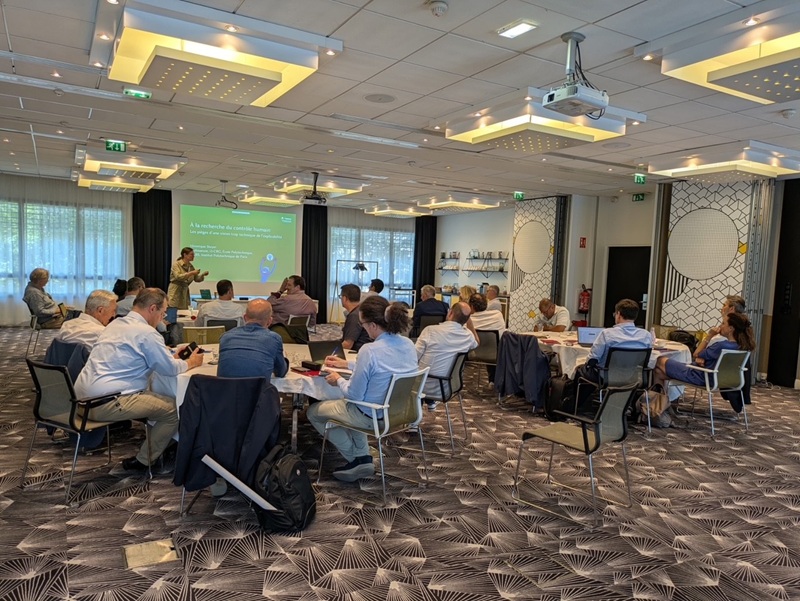
On January 29, Foncsi organized the first meeting of the new strategic analysis entitled “Mastering the Simplification Process”, the fourth in the ongoing scientific program “Foncsi 4”. Twenty two people, representing twelve of our sponsors, have already committed to this research project alongside Foncsi team.
What exactly is simplification?
In industrial organizations, frontline staff and managers regularly complain about the growing bureaucratization of safety: an increasing number of procedures, more control requirements, etc. Safety managers and specialists themselves regret having to issue so many rules and operate heavy formal systems in order to respond to increasingly detailed regulatory requirements. All agree in denouncing the harmful consequences of this growing complexity. Beyond administrative costs, time loss, and slower decision making, they highlight negative psychological impacts on employees: overload, a feeling of meaninglessness or uselessness of the work performed, weakened sense of responsibility in the face of abstract systems, etc.
Even more concerning, this excessive bureaucratization would run counter to safety objectives: these formal systems are, at least partly, disconnected from the concrete realities of fieldwork and tend to divert the attention of everyone – frontline staff, managers, safety leaders, and even executives – away from the truly important issues.
The solution seems obvious: simplification is needed. Moreover, simplification has become a widely used mantra in many other domains beyond safety, including public administration.
But what exactly should be simplified? And at what level? How can we ensure that simplification does not lead to a degradation of safety performance? Can simplification be a mere subtraction (fewer procedures, controls, systems)? Or must it include changes in work practices and management approaches? And if so, what kind of change?
About twenty participants
The first meeting of the strategic analysis brought together the 22 participants already designated by our sponsors to represent them and work on this complex topic. During this initial session, each participant introduced themselves and shared, in broad terms, what simplification means within their respective organizations.
Participants
• Kevin Guelle, Sylvie Thellier & Caroline Lavarenne (ASNR)
• Christophe Yobou & Antoine Moreau (EDF)
• Marie Pietre Cambacedes (Enedis)
• Véronique Rannou & Bruno Dufossé (EPSF)
• Romuald Perinet (Natran)
• Emmanuel Musche & David Catarino (OPPBTP)
• Daniel Soldini (Razel-Bec)
• Eric Genet & Géraldine Real (RTE)
• Célia Levy & Isabelle Vaucelles (SNCF)
• Sébastien Majoux & Erwan Huvet (Suez)
• Nicolas Forest & Michel-André Klein (TotalEnergies)
• Canissius Gassa & Sigrid Clavieras (UTPF)
Other participants may join the group in the coming weeks.
On Foncsi side, the strategic analysis is coordinated by Caroline Kamaté and Hervé Laroche, with scientific support from Stéphanie Tillement (IMT Atlantique). Benjamin Razaiarisoa, as an Icsi expert, will also follow this strategic analysis.
Next steps in the analysis
The strategic analysis is now officially underway. The group will meet and work together regularly over the coming months. Sector based clusters may also be set up in parallel (construction, energy services, and rail transport) to identify specific issues and present case studies.
Another area of work under consideration is the examination of international experiences or established successful practices abroad. In short, a dense and particularly insightful analysis lies ahead.
The next major milestone will be the international academic seminar scheduled at the end of the year. This will be followed by a period dedicated to consolidating the findings, drafting the various publications, and holding the final seminar to present results to all sponsors in 2027.
Wishing everyone good work!