
Two Graphic Novels about Challenger Space Shuttle Disaster


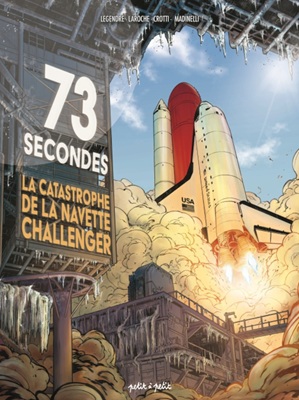
Legendre, N., Crotti, M., Madinelli, N. & Laroche, H. (2026). 73 secondes. La catastrophe de la navette Challenger. Petit à petit.
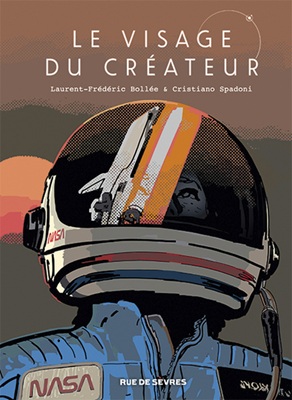
Bollée, L-F. & Spadoni, C. (2026). Le Visage du Créateur. Rue de Sèvres.
Our opinion
For summer, let’s take a brief step away from scholarly publications without losing sight of safety. Two graphic novels have recently been published on the same topic: Challenger space shuttle disaster, in which the shuttle broke apart shortly after launch 40 years ago, killing all seven astronauts on board. It’s actually quite rare for graphic novels to focus on major accidents. The fact that two graphic novels have been released on the same event is all the more noteworthy. A landmark event that garnered worldwide attention, the Challenger disaster has been the subject of countless analyses and is one of the key entries in the collection of famous case studies in the field of safety. This case is part of the safety culture in the sense that it is routinely referenced in discussions among safety specialists and helps shape their interpretation of contemporary situations and events. These two graphic novels are intended for a broader audience, but safety professionals, too, can find them both enjoyable and insightful.
Our Summary
Let’s admit it right now: “73 secondes” is a publication supported by ICSI, which also provided expertise in developing the documentary pages that complement the graphic narrative. As a result, our objectivity is undoubtedly somewhat clouded. Even so, comparing the two projects remains worthwhile because, although these two graphic novels share the same ambition, they take very different approaches to achieving it.
“Le Visage du Créateur” recounts the history of the Space Shuttle program from a broad perspective, focusing on this particular phase of the American space endeavor that followed the achievement of Apollo 11 and humanity’s first steps on the Moon. Structured as a countdown, the narrative emphasizes the sociological changes that characterized the Shuttle program, which, reflecting broader developments in American society during the 1970s and 1980s, opened the space program to women and minorities. The story gives a prominent role to actress Nichelle Nichols, Lieutenant Uhura in the Star Trek series (the one featuring Leonard Nimoy as Mr. Spock and William Shatner as Captain Kirk), portraying her as a driving force behind this transformation. While it is true that Nichelle Nichols, after being hired by NASA, became deeply involved in promoting recruitment programs aimed at what is now referred to as diversity, it is not entirely certain that she was the original instigator of these efforts. Nevertheless, it is a compelling and well-told story. The other central figure in the narrative is teacher Christa McAuliffe, who was meant to be the star of the mission by delivering a lesson to American schoolchildren from the shuttle while in orbit. Portrayed through the lens of contemporary feminist concerns, Christa emerges as a woman breaking free from her role as a mother and wife to pursue a personal dream. Other sources suggest, however, that her husband encouraged her to apply for the mission and supported her throughout her preparation.
As for the disaster itself, “Le Visage du Créateur” provides a detailed account of the accident, including the final moments of Christa and the other astronauts after the crew cabin, torn away by the explosion, continued to rise before plunging toward the ocean. It is a moving reconstruction of that terrible end, which lasted nearly three minutes, but it is also a highly speculative interpretation, since in reality very little evidence exists about what the astronauts experienced, at least those who may still have been alive and conscious.
The causes of the disaster, however, are only briefly mentioned. We know that the failure of small rubber O-rings on the solid rocket boosters caused the accident. Yet the malfunctioning of these seals was already known to both NASA and its contractor Thiokol. How does a problem affecting a minor component develop into a catastrophe despite having been identified? “Le Visage du Créateur” pays little attention to this essential question. This is where it differs fundamentally from “73 secondes”, which makes understanding the origins of the accident the central thread running through the book. Certainly more complex and at times dense, “73 secondes” delves into the details of internal meetings at NASA and Thiokol. Far removed from launch pads and pressure suits, in anonymous office buildings, readers follow engineers and managers navigating a maze of administrative procedures while grappling with technical problems that stubbornly resist resolution, resource constraints, and budgetary pressures. In short, they are people trying to do their jobs. They occasionally make decisions, but more often they cope, procrastinate, recover, become frustrated, worry, and do what they can within the constraints placed upon them. Like all engineers and managers, they discuss issues, write reports, conduct tests, offer opinions, search for ideas, complete forms, and prepare schedules. They board airplanes, stay in hotels, send faxes, and spend countless hours on the telephone and in teleconferences long before Teams, Meet, or Zoom existed.
It is within this largely unspectacular and rarely described activity that the Challenger accident has its roots. Of course, the starting point was a technical system whose design was flawed, but above all it was the inability of these organizations to address known failures that ultimately produced the catastrophe. This inability first manifested itself through a slow process that led the organizations involved to become resigned, by default, to seals that persistently failed to operate as intended. It then reached its tragic conclusion in a decision-making process – on the eve of the launch – that failed to break with this history of acceptance. “73 secondes” takes the time to lift the veil on this ordinary work, obscure to some perhaps, yet far from mysterious.
Complementing the illustrated chapters, the book adopts a distinctly documentary approach by providing informative texts that help readers develop interpretations informed by analyses drawn from the social sciences (sociology, social psychology, and organizational studies) and derive lessons from them. Among the topics discussed are the importance of communication quality, the effects of role distribution within organizations, and the place of expert judgment alongside technical calculations. In particular, these documentary sections present the concept of normalization of deviance, developed by sociologist Diane Vaughan to explain the long process that led to the accident. Alternative explanations, sometimes competing ones, are also presented, since nothing is more dangerous than suggesting that there is a single key to understanding such events. Finally, the book concludes with a series of ideas and practices “to advance safety.” Specialist readers may recognize some of the initiatives they themselves are pursuing within their organizations and perhaps find sources of inspiration there (as well as in the bibliography provided).
Both graphic novels conclude with the tragic echo of the Challenger disaster: the disintegration of the Space Shuttle Columbia in 2003. NASA had not learned enough from Challenger – or had forgotten its lessons. No accident protects against another accident: safety is never a given.

